Description
- Propylene glycol is a high-purity, syrup-like liquid that is colorless, odorless, tasteless, synthetic, and fully miscible with water.
- Technical / USP grade antifreeze; propylene glycol is also used as a solvent and humectant in, among others, cosmetics and antifreeze fluids.
- Propylene glycol is not classified as a hazardous substance under Regulation (EC) No 1272/2008 or Directive 67/548/EEC.
- It performs a similar function to ethylene glycol, but its use is preferred due to its lower toxicity.
Specification
Quality grades: Technical and USP
- Freezing point: -58 °C
- Boiling point: 184–189 °C
- Density: 1.075 g/cm³
- Viscosity: 45 mPa·s
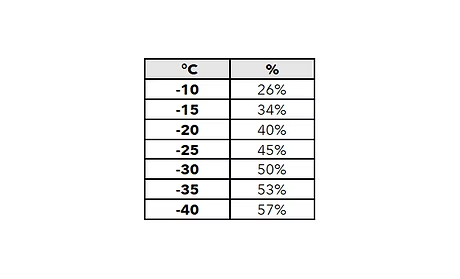
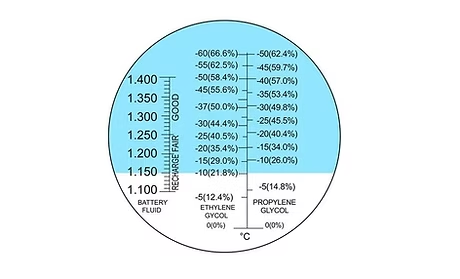
- The freezing point is not directly proportional to dilution.
- A mixture of 1 part water and 1 part propylene glycol has a freezing point below -30 °C.
- Freezing point of 99% solution: -58 °C
- Excellent corrosion resistance and high thermal stability.
- Recommended replacement interval: 2–3 years
General Applications
- Use in cooling systems of industrial facilities
- De-icing and anti-icing applications
- Use in heat pumps and solar collectors
- Other consumer uses (PC 28: Perfumes and fragrances; PC 29: Pharmaceuticals; PC 39: Cosmetics and personal care products)
- Agrochemical uses (PC 12: Fertilizers; PC 27: Plant protection products)
- Use in coatings
- Use in cleaning products
Sustainability Summary
Production Process

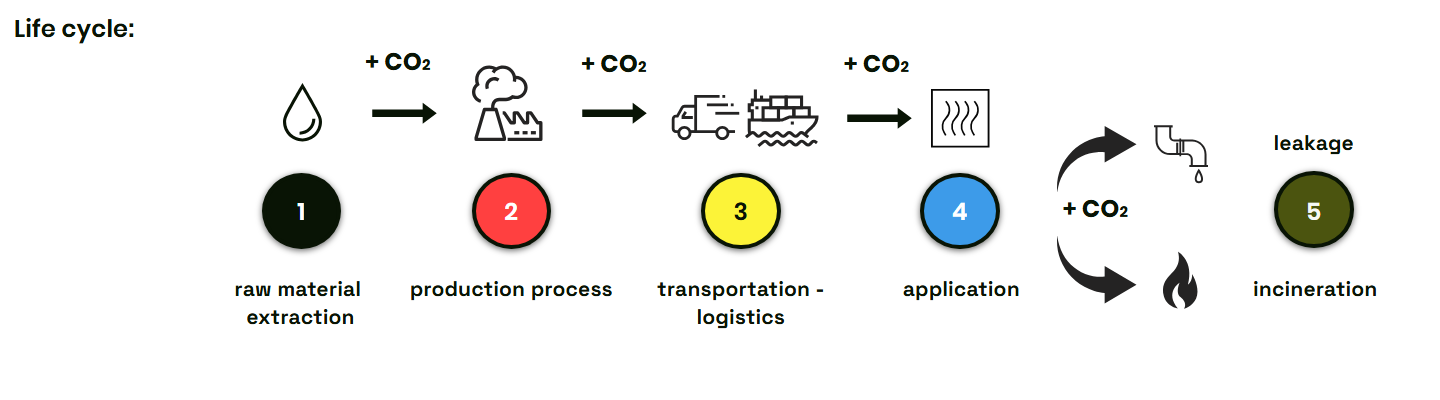
Life Cycle Assessment (LCA) – per 1 ton (T)
- 🌱 Based on the Ecoinvent database: from raw material extraction to the end of the production process
- 🌍 Carbon footprint: ≈ 4670 kg CO₂ eq/T, equivalent to approximately (US EPA data): ~18,870 km driven (car), ~1,980 liters of gasoline consumed, ~2,340 kg of coal burned, ~6 months of energy use for an average European household, ~11 barrels of crude oil burned
- ♻️ Offset requirement: ≈ growth of 77 tree saplings over 10 years, ≈ carbon sequestration capacity of 2.3 hectares of forest per year
Life Cycle